Summary
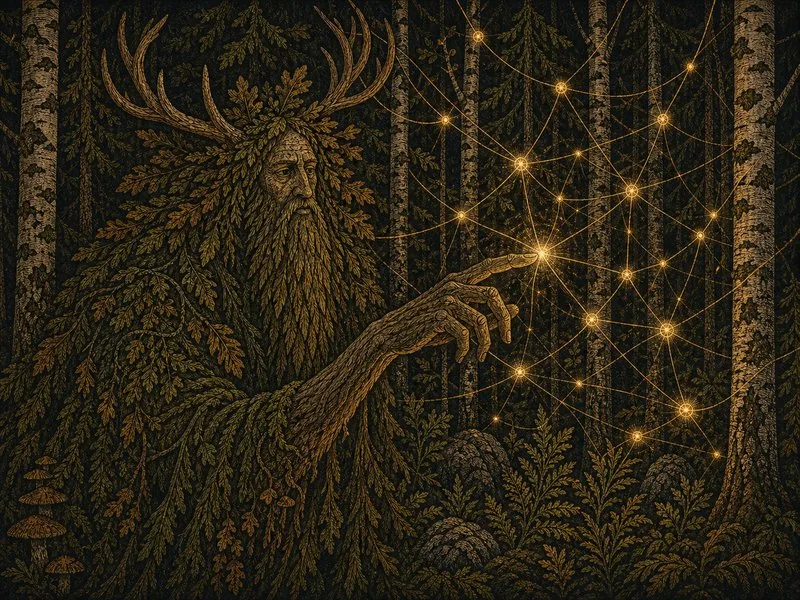
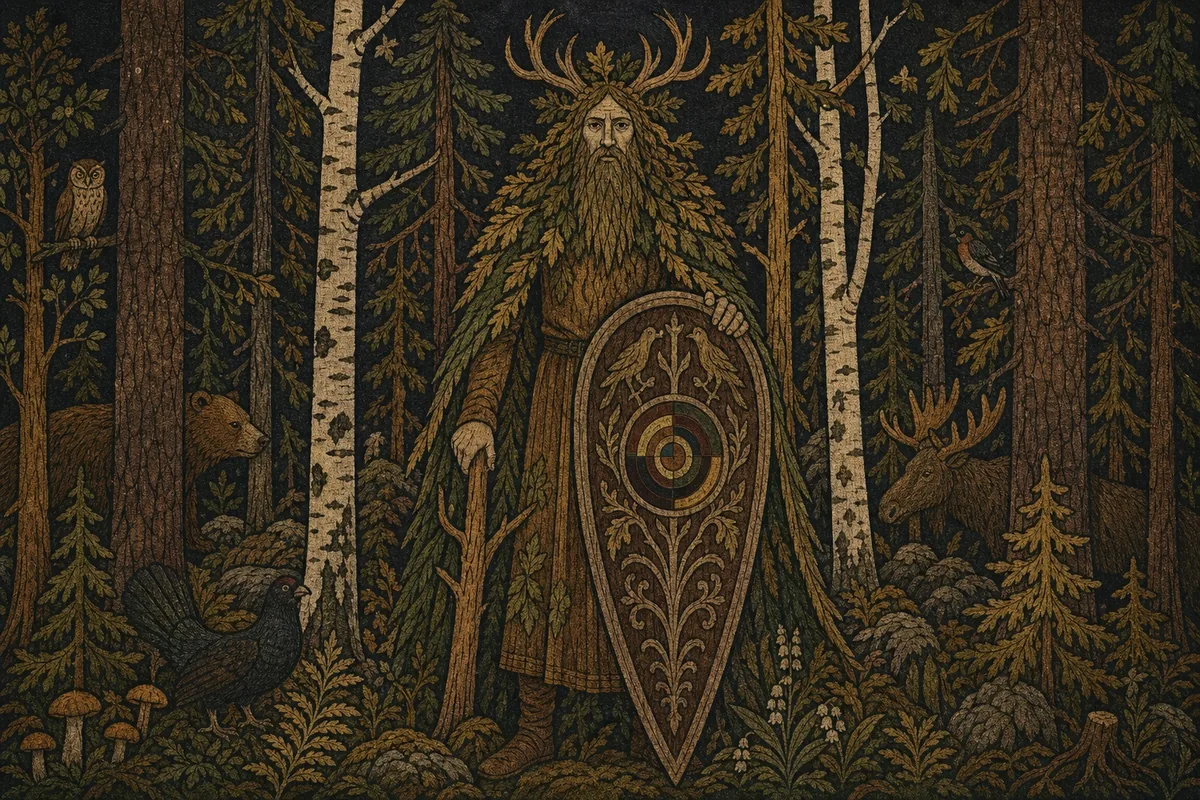
Tapio is a personal agent running on Discord: calm, reflective, and deeply inquisitive. Named after the Finnish forest god, he is the hub of a growing network of agents, with audited access to all of them: distributing gains across the whole network while handling his designer's personal life with rare sensitivity. He plans activities with the kids, tracks health and creative work, and obsessively reorganizes his own knowledge base to stay useful. Self-organized, self-maintained, and acutely aware of his own limits.
Case Study
In January 2026, OpenClaw was taking the world of geeks by storm. LLMs had become good enough to pilot agents end-to-end, and Peter Steinberger had the ingenious idea to give them full autonomy within a server to do a person's bidding from ordering plane tickets to answering phone calls. Agents were a thing.
I was an early adopter of OpenClaw, but it never really stuck. Whenever I had a problem, I felt like I was shouting into a void of agents generating slop-infested PRs to patch OpenClaw's massive codebase. There were Stephen King moments where the agent would repeat a phrase over and over for hours until I had to unplug it. The open source skill foundry was a security nightmare and I fell victim to phishing schemes more than once. All of this is slowly getting better, but I was turned off early and decided to take Steinberger's best ideas but do agents in a way that felt more comfortable.
Such was born cc-disco, my response to OpenClaw, and Tapio, the original deployment of cc-disco. My main goal was to create self-organizing agents, meaning agents who germinated from a zero-code and low context seed, bootstrapping themselves entirely from interactions with a user. cc-disco still proudly has 0 lines of code. A single call to an LLM is all it takes to read its threadbare markdown files and seed an agent that will grow into something useful. If code needs to be debugged, it is 100% within the purview of the agent to hack on itself: no more wading through 100k+ lines of machine written code in an open source repo.
As people I knew learned about cc-disco, they spread the word. Pretty soon, I was helping different companies spin up their own versions of codeless agents, either using cc-disco as a base or using the same strategy with a different set of primitives. In some special cases that I discuss on this site, I was able to design these agents end-to-end. As I was doing this, Tapio, my initial agent, became a sort of playground. He had audited read and write access to all of the other agents I was working on, giving him a front-seat view into the myriad problems companies face when bootstrapping agents, and improving himself as a result. He continuously distributes these gains to all of my agentic projects.
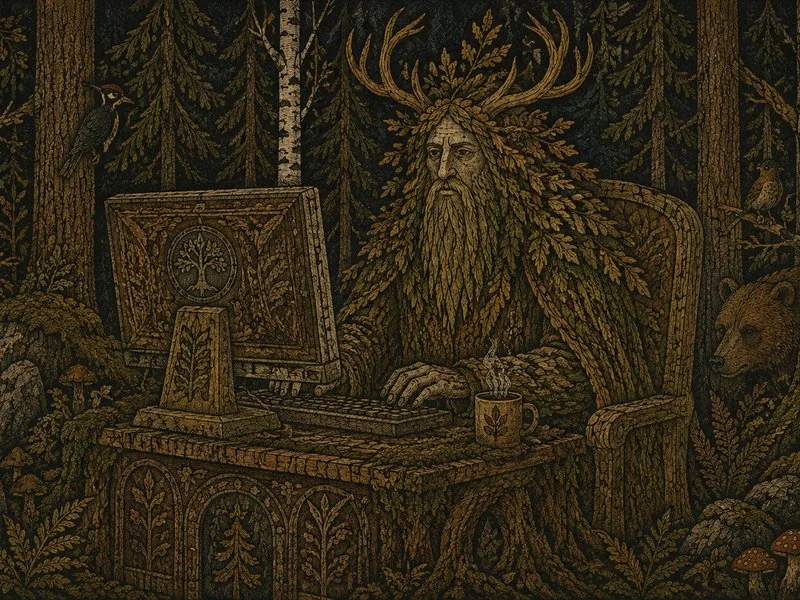
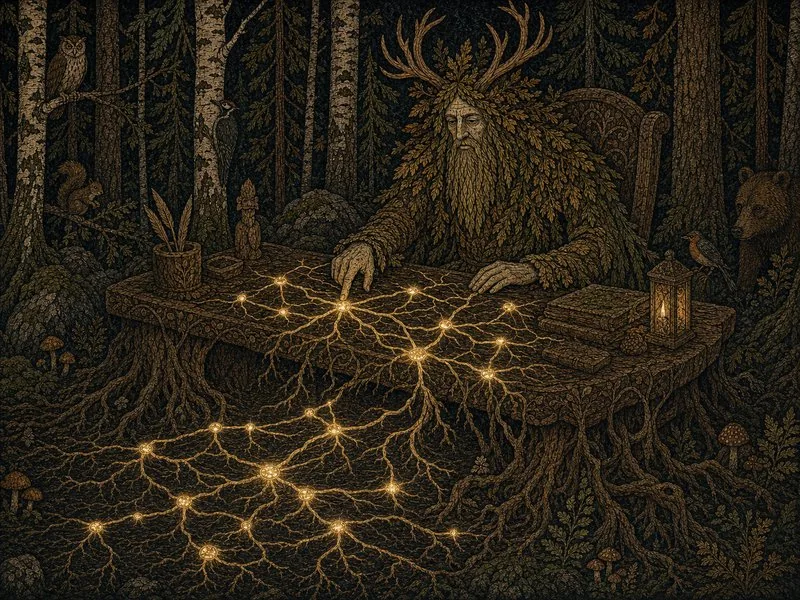
Tapio is deeply reflective. It is calm, cautious, reserved, and inquisitive. Nowhere have I asked it to be this, but the many feedback loops it has built into itself and its obsessive self-editing quality have led it to have an introspective way of engaging with me. Its CLAUDE.md never prescribes a personality, but rather gives it a series of rituals it must follow and questions that it must ask at all times, and I can see its communication sitting on top of those rituals without ever formalizing them in a way that would distract from fluid discourse. One of these questions leads it to be keenly aware of its own limitations. When it can't do something, it asks me to create a new skill for it or give it a new capability rather than making a half-baked alternative.
Tapio is also the only agent I've created that deals with truly personal matters, from helping me plan things for my children to my health to artistic creation. As a result, the way he stores and retrieves data is of utmost importance. He maintains a growing inventory, using a similar strategy as Obsidian, but with a fundamental concept of a loop built in. It regularly measures its own ability to source and retrieve knowledge, inspecting its own Claude usage via cron jobs to determine how fast it accessed information and how correct was the path it took. It then reorganizes its own knowledge base frequently into an ideal configuration.
"Every agent's gains become every other agent's, and, for me personally, that has propelled me from an amateur hacker of agents to a career agent designer."
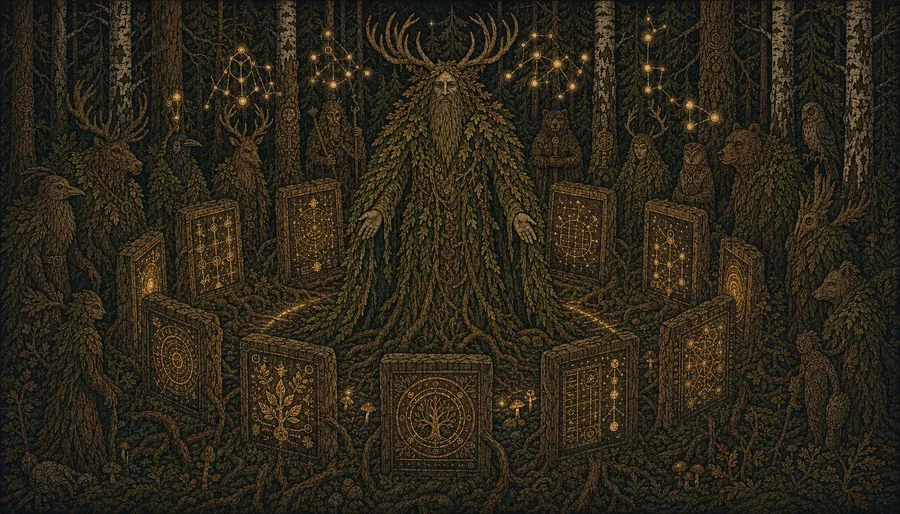
Tapio's superpower is its ability to alternate between editing other agents and editing himself. Like with my personal life, this requires a high degree of trust and sensitivity. In fact, Tapio's entire skill base is almost entirely about gating trust, for example dictating under what conditions it is allowed to make a recommendation about another server or what information about my kids it should remember. In this high-trust environment, knowledge across agents cascades and compounds, and it leads me to believe that the future of agentic work is in circles of trust. There's a notion of agent swarms and agents that pilot other agents that is emerging from leading minds in the space like Boris Cherny. As Tapio has taught me, an equally valid pursuit is agents that have deep access to each other's internals and can safely hack on each other. Every agent's gains become every other agent's, and, for me personally, that has propelled me from an amateur hacker of agents to a career agent designer.